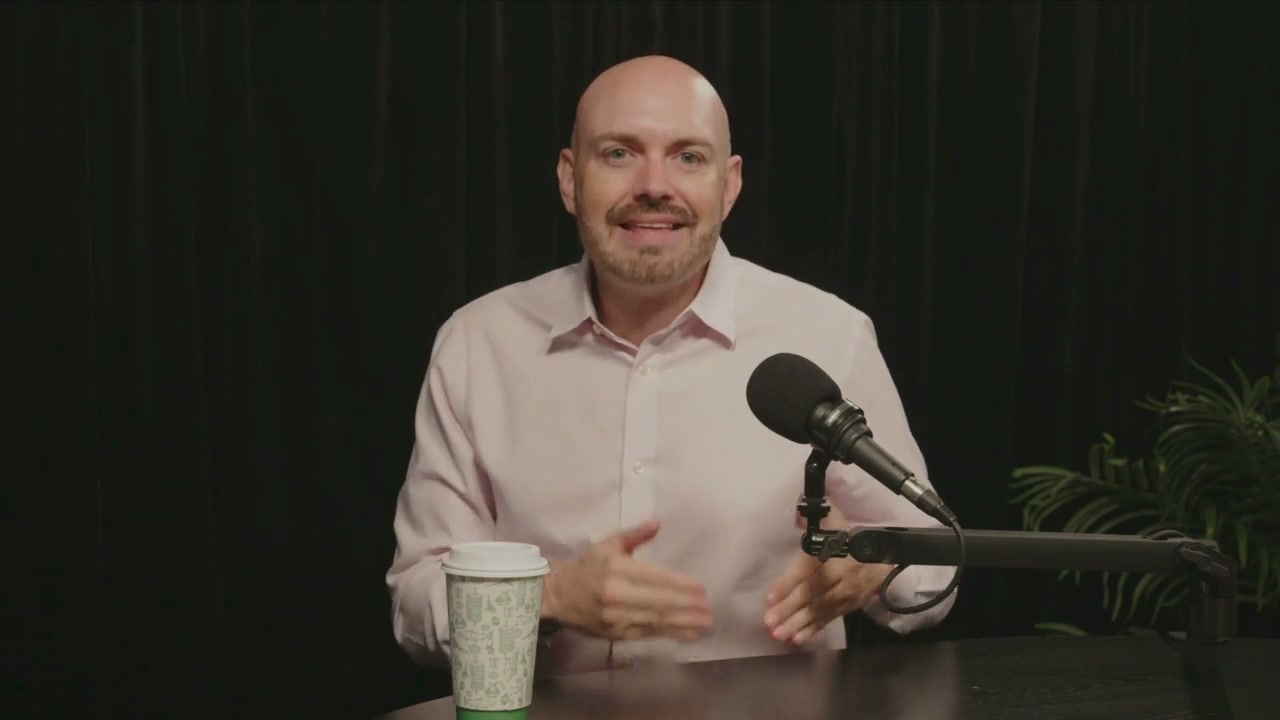
Episode Summary
Child-free weddings, plus-ones, speeches, who pays—friends, these questions can get complicated fast. In this episode, I’m sharing how I approach the etiquette conversations that come up again and again in wedding planning. We’ll talk about making thoughtful guest-list decisions, choosing where speeches belong, getting clear about financial contributions, and navigating tricky family dynamics with care. My biggest advice is to have the hard conversations early and put the details on paper. There isn’t one perfect answer for every family, but bringing the right people together can make the way forward much clearer.
Let’s Connect
julianleaver.com | @julianleaver
Resources
Full Episode Transcript
Hello friends and welcome back to Mind Over Matrimony and today we are just going to dive into some of those fun etiquette questions that people are asking. Etiquette is always changing, it's evolving, it's for me it's about meeting you where you are and what works for you because don't forget the number one rule of etiquette is to make other people feel comfortable. So how do we do that? How do we answer some of those questions? And so today we're just going to pop in and talk about various different questions and give some hot topic answers and maybe you can digest something or maybe you've been struggling with something and you really want a quick answer.
So here we are. So the first topic really is about child-free weddings. I think this is a thing that everyone struggles with in the beginning of the process, right? The number one hardest thing to do for your wedding besides figuring out who you're going to marry is who's coming, right? People struggle with this all the time. I probably have this conversation twice a week and I literally just had it yesterday with a lovely girl who's like, I'm the last one to get married in my friend group.
And so all of my friends have kids, but I really don't want to invite them. And so how do you do that politely? How do you do that without hurting anyone's feelings? How do you do that with grace? And I think the number one rule here is that it doesn't go on the invitation. Okay, friends, it doesn't go printed on anything that is mailed to anyone. It goes on the website and it goes on the website under frequently asked questions or it goes under the website underneath the information for the actual wedding itself.
And what I would say here is if you don't want to say we are not having children, then blame it on the venue. That's my go-to. Sorry, venue people, if you're listening, but you're getting blamed for this one, we don't allow children at these events and X, Y, and Z, and off you go. Another quick little note about this. This is also a very slippery slope when you are having children in your wedding, because if you have children in your wedding, then children can be allowed at the venue.
So you really do have to play this one with some nuance and explain to people, hey, maybe they're going to just be at the ceremony and then they're leaving, because you do want to have an experience where kids are not running all over the place, or you're losing all of your friends to go and feed and do all of the different elements that come along with having kids, right? Kids are great. Honestly, I think kids at a wedding in a certain circumstance are very appropriate, and kids at a wedding in other circumstances aren't very appropriate, right?
If you're getting married by the edge of an infinity pool and you're going to be worried about the kids falling in the pool, that's not a place for kids. So just read the room, I think, and don't worry too much about offending people. You have to do what's right for you and your family and what you guys have in mind. So then the next big question really is about plus ones, right? Who gets a plus one? Why do they get a plus one?
They've been dating for one hour, or have they been dating for 20 years and they're just not getting married, right? I think the thing about plus ones is again, it's about meeting your friends and your family where they are, right? And looking at each situation case by case, and this is why I say that the invitation process of inviting all of these people is actually the hardest part of this because you do have to go in and go line by line friends and say, okay, Bob and Judy Smith, right?
They, or Bob and Judy, okay? Maybe they're not Smith. They are not married. How long have they been dating? What's their relationship status look like? Do we like both Bob and Judy? Who are we going to invite? If we invite Bob and not Judy, are we never going to be invited over for dinner again, right? Each line by line is really nuanced. And so I think don't throw the baby out with the bath water in this situation and just make a blanket, no plus ones.
And that's what we're doing, right? Because it's not as simple as that friends, unfortunately. But that's why you're working on this guest list while we're working to figure out where you're going to go get married, right? These two processes happen in tandem. I think people are always like, oh my God, I'm so ready to book the venue. We can't book the venue if we don't know who's coming, friends, because we don't know how many people you're going to have. So I'm going to go off in this direction with an estimated number of people that are coming.
And you're going to go off in this direction and figure out who those actual people are. And then we get to meet back in the middle and make sure that all of that still makes sense and is copacetic and works and then assess from there. And then we're ready to move forward to the next step. The next big controversial piece. And again, this is a conversation that I've been having every single week is who gets to give a speech and where, right?
Because I think the where is even more important than the who. Because the who we can work in, right? But where are they giving the speech is super important. And for some reason, this is like another hang up. I think there's these interesting little, almost let's call them choke points in the process where the bouncing into each other as humans occurs in the wedding planning process, right? We're bouncing into each other about kids. We're bouncing into each other about who's invited is the plus one or not the plus one.
And then also who's going to speak and all of those have to do with offending people. And maybe stating your preferences on a subject very definitively that you've never actually had to state before, right? You've never had to put a stake in the ground and say, Nope, this is the way that we're doing it. And this is the first time, right? So I go back to this idea of this is a group project and you're doing it for the first time with your parents and his or her parents and et cetera, et cetera, right?
And so everybody's emotions are going to be high about this. And every family does this very differently in terms of speeches, friends. So what I would say is this, in a lot of these cases, try not to have a piecemeal conversation with each party. Okay. If you can do it, get everybody in one room together and actually have a little meeting to talk about all of these different weird subjects around guests and have everybody be in the meeting to voice their opinion and to bounce off of each other and to get to a place that feels really comfortable.
It's interesting. I just did this past weekend more so on a venue search conversation. And I've never actually been present in this conversation before. It was really cool because what these guys did is two grooms and they literally brought both their parents and they put everybody in a room together and they—we just hashed it out. And I just sat there as not really the facilitator almost as just like the questioner—when things got a little off track or when I was like, oh, that kind of doesn't exactly make sense, right?
Because people don't know what they don't know. But I've never been invited into a conversation like that before. They usually happen behind closed doors. And what I would also say is that they don't usually happen altogether. It's a couple goes and talks to this set of parents, then they go to talk to this set of the parents. And then they're making a decision in a little like vacuum in some kind of way. And what I'll tell you is that if you bring everybody into the same room and you spend an hour together, it literally was an hour long conversation.
You spitball all the things and you treat it as like a business meeting in some ways. And you have an agenda and you say, okay, we're going to talk about this. We're going to talk about this. We're going to talk about this. And then at the end, we're going to make a decision. And we're going to have some parameters. And so I left that meeting knowing exactly who I needed to call, exactly what needed to happen. And I think you can do the same thing with any of these little bits that we're talking about today, right?
Don't make a decision in a vacuum. That's really the most important thing is bring everybody together. Because one side of the family may really—speeches may be a very big deal for them, right? And we had a groom actually last year who he had given a speech at 25 of his friends' weddings. Okay? He was like the speech closer. He was the speaker. The man was so charismatic, just above and beyond in terms of his speech making and was now also basically the last guy in his friend group to get married, right?
So all of these guys wanted to return this favor and felt like it was like their responsibility to give the best speech of their life to honor this guy who had given the best speech of his life at each of their weddings. What do you do with that? Okay? Friends, we do need to know that information so that we can make the rehearsal dinner longer, okay? To make that work. And we made it work, right? We figured out how to do wine service in between so that everybody could still have their drinks and you could get up and go to the bathroom and make this all work to make all of these speeches happen.
Because that was really important for them. And to get back to the root of the question, I think the majority of speeches these days happen at the rehearsal dinner. That is really the appropriate place for them. And the reason is because that group is generally smaller. It's more intimate. It is the people that are the very, very closest to you are in that room. And so you want them to feel very special. And those are the people who know most of the stories that are going to be told.
It's like that truly core group. Do dads also speak at that? Yes, usually whoever is hosting the rehearsal dinner will speak at that. And then whoever is hosting the wedding will usually speak at the wedding. And there's kind of this whole back and forth about best man, maid of honor, best man, maid of honor speeches, et cetera, et cetera in the wedding day. But I would say that really, if you can get those speeches in the rehearsal dinner, that's the place to do them.
And really do one big, great speech at the wedding and then get on with the party. Because the starting and the stopping and the starting and the stopping is a lot at the wedding. And so I really would try not to do that. Who knows? So then friends, this segues us so nicely into who pays, okay? Because in the modern new world, this rule has been literally thrown out the window. And in the new world, everybody pays, right? Because everybody wants different, different pieces, different parts, different bobs, like every single person has a different kind of priority.
And so I would say more often than not, we are seeing still, there is a very kind of traditional split between the parents of the bride or the parents of the groom, where in homosexual couples, sometimes even both sets of parents will contribute, the kids will contribute, the bride and groom contribute. It's all over the place. And what I would also say is this is another family meeting situation, right? These are the things that you can sort out on the front side and have these conversations early to be able to determine who is doing what.
And we're used to from Julian Leaver Events side doing whatever works best for you, right? We have a lot of different ways to be able to change the budgets and who is paying for what and who sees what and how all of that is managed on the backside is very simple for us or really any wedding planner. So don't let that be a hindrance. Just get right with each other before you get into a situation where you've committed someone to something and they don't actually know they've been committed to it.
We just try to avoid sticky conversations later in the process by having a much easier conversation up front. Again, not something that we can actually facilitate for you, but it is something where you all need to come together and get right with each other on that subject and then go from there. What I will say is that a lot of the time lately, we've been doing these venue research projects because people don't know where they want to get married. And so they also don't know what things cost.
And so what's nice about that is doing that at the beginning allows you to then take that information and go and have a real conversation. Okay, friends, because that's I think the other thing that's interesting about where we are at currently is that not even where we're at currently. Weddings are an opaque thing to price out because they're a piece of art. And so you don't know exactly what's going to happen in them. You don't know what the requirements are. You don't even know where you want to get married.
So how can you have a budget conversation and be like, well, you're going to give me X number of dollars, but we don't actually know what it costs to do it, right? And so we have to get some parameters set to be like, okay, this is what it costs. So now we can go and have this budget conversation in a more educated fashion. So I think that's been an interesting piece of our business that has shifted a lot is we're doing these research projects more often to help people understand what things actually cost so they can be educated to go and do this conversation.
And then everybody is just so much happier when they have a real understanding of what things cost. I know. And then let's talk a little bit about obligation. Okay, friends, because I think when you're having a wedding and you're having these conversations with your parents and also, everyone comes out of the woodwork to talk about your wedding, because nowadays we publicly announce them via Instagram, whereas it used to be announced in the paper, right? So maybe somebody missed it that day, but now it's permanent and it lives on your feed and everyone knows you're getting married, right?
And everyone also is hoping that they're going to get invited to your wedding. And so how do you deal with who is actually coming? And I think even more specifically, like, how do you deal with who in your family is coming? Because families are big and families get offended easily and family dynamics are one of the biggest things that we deal with on the wedding planning side. And so I think it's more about who is coming and how close are they to you?
And I would love to be able to be like a magic wand. And here it is right here is the answer, but there actually is not a good, solid, straightforward answer here, because I don't know your family. And so this is, again, a conversation where everybody needs to get together and have a family powwow about this. Now, does that family powwow need to be like both sets of parents? In this meeting, I actually don't think so, right? I think this is more like each side is talking to their side and understanding what the dynamics are, because are we inviting all the 35 first cousins, right?
Because ultimately, unless we're building a tent for you, you're going to have some kind of a venue constraint. And so piecemealing who gets what and how many people get to come from each side and how all of that works is really important, again, to determine on the front side friends. Please let's not try to figure it out or sort it out in the middle of the process, because at that point, so many decisions have already been made. And people don't like to do this part.
If you're a client and you're listening and you're chuckling at home, because you know that I've had this conversation with you about please just put it on paper. Oh, I have my guest list done. Okay, great. Can you send it to me? No, it's in my head. I know these people. No, let's write it down. What is the actual number? And it's hard to do like pot, kettle, friends, okay? Like when Francisco and I got married, it was hard to do.
And you're like, oh my God, if we invite this person, then it opens up this whole other little window. And so you do have to assess all of that. But the most important thing is to really write it down, y'all. It's like journaling, right? If you journal, then you can let things out of your brain and they take a different space and take on a different feeling and meaning once it's outside of you, the same with your guest list, write it down.
And then once it's out of you, you can literally make those decisions. And also, you can, with your partner, make better decisions because you both have the information to do what you need to do to make a good decision. So write it down, friends. Just do the guest list and then have the hard conversations on the front side because friends, secrets never work out well in this space. Oh my goodness. And then how do we handle family dynamics that are a little tricky, right?
I think everybody is always wondering, how do I handle maybe my parents that are divorced or they haven't seen each other since their divorce? Or they really are not speaking? Or maybe I'm only going to invite one of these parents because I have a relationship with this one and it's very close. And how do I navigate all of that? And I think here again, the answer is just with as much calm and care as humanly possible because this is a moment you don't get to redo, right?
This is a moment that lives in time for this certain little bit and you don't get a redo on this. And so making those kinds of decisions about who's invited and how you're handling all of this process does need to be done delicately if the relationships are a little tricky. And again, only you know if they're tricky, right? But this is also a place where we can be advice givers in a lot of ways about how we've seen certain situations play out.
I would also say your therapist is also a great place to go to talk some of this out, right? Because what also happens in weddings is emotions happen, right? And things get brought up and there are triggers. And there are things from your childhood about X, Y, and Z was always said to me. And now as an adult, X, Y and Z is being said to me. And how am I going to react to that in this certain situation? And so every family is a little bit different here.
And of course, it's really important for you to be able to, I think communicate that with your partner so that the two of you are on the same page about how you want to handle things because sometimes you're going to need to break down. You're going to need to go and cry in the corner and scream and be like, this is so unfair. And I hate the way that this is going. And your partner needs to know, okay, at that moment, I need to be the strong one, right?
I am not the one who is—who's dealing with this emotion and this whatever the situation might be. And I have to be the strong one and I have to stand up for what we as a couple have decided. This is what we have decided and we are sticking to that decision. And we've communicated a decision early on, right? Again, these are not questions to be left until the end, friends. There is a situation that we ran into where there was a tricky situation with a dad and he hadn't really been told that he was not going to walk his daughter down the aisle and the stepdad was going to walk the daughter down the aisle.
And so what I would tell you, friends, is have those conversations early. They are hard. They are really difficult and they are terrifying. And, but I will tell you, they are much less terrifying to have in a room where it is just you versus you are literally getting ready for your wedding day. And this conversation has not been had and someone has to have this conversation in a more public setting. Have the hard conversations early, get into it, dig into it, deal with those emotions, cry, scream, do whatever you need to do, drive around the block, go to McDonald's and have a freaking McFlurry.
Whatever it is to work this all out ahead of time is always the best solution. That's it. Yeah, it's good. So the theme of today, friends, is that these situations are tricky, right? And you have to handle them with care, but they are all surmountable, right? Nothing in this situation is insurmountable. Sometimes it feels that way, but ripping off the band-aid, having the hard conversation, doing it early, bringing everybody together and just powwowing through this together is the best way forward.
It helps answer all of these questions. And the more that you talk it out on the front side, the better off you will be. So thanks so much for joining us. If you have questions or comments, you can always reach out or drop them in the comment section here and we'll get back to you.
A The Media Socialites Production

All Posts
Show Comments |
Add a Comment
« Episode 34: Where in the World Should You Get Married?
Episode 36: Why AI Can’t Build Your Wedding Budget…But Real Data Can »